How does ChatGPT choose which business it recommends?
ChatGPT does not pick businesses at random. It reads clear signals from your site. Here is what actually decides whether you get mentioned.
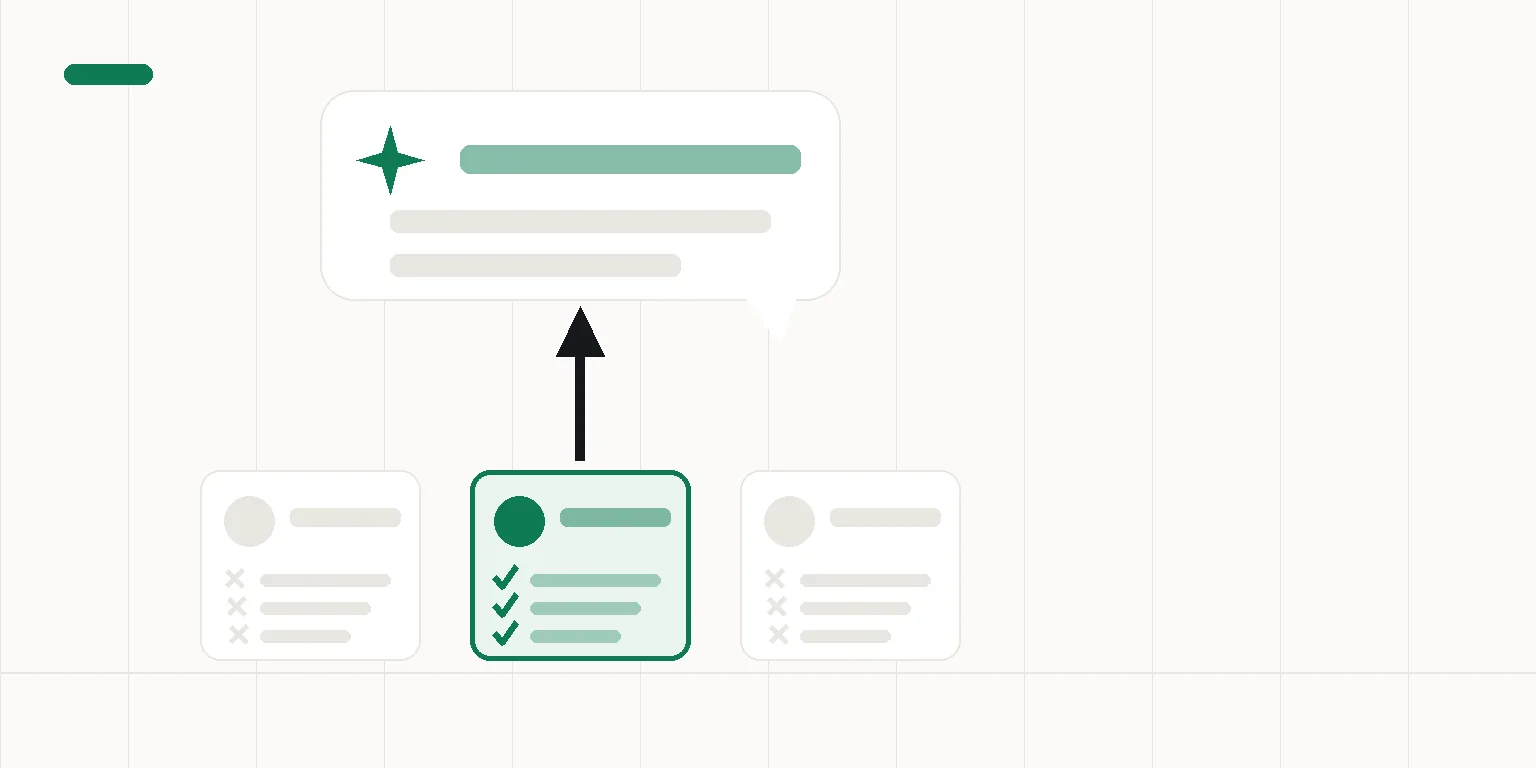
ChatGPT does not flip a coin when it recommends one business over another. It reads what is available across the web and picks the business it can understand with the clearest, most consistent, most machine-readable information, name, location, services, prices. If a business is not clear on any of these, the model simply skips it and mentions someone else instead.
This is a bigger shift than it sounds. With Google search, it was enough to exist and be indexed. With AI, the game is different: there is room for one or two businesses in the answer, and the model picks them based on how easy they are to read.
Where does ChatGPT actually get its information?
ChatGPT and similar models draw on public web information: a business's own site, its Google Business Profile, directories, and review sites. When someone asks for a recommendation, the model is not crawling the live web in real time, it relies on information that was already clear and consistent enough to be found and remembered.
Why do some businesses get mentioned and others don't?
The difference is almost always in the quality of the information, not the quality of the business. Two competitors at the same level can get very different treatment if one site states plainly what it does and where, while the other is full of vague marketing language with no specifics.
A handful of things actually decide it:
- Consistent basic details. Name, address, phone number, and hours read the same way on the website, the Google profile, and directories. A conflict makes the model hesitate over which version to trust.
- Structured data, or schema markup. Code added behind the page that states directly: this is the business name, this is the address, this is the price. Without it, the model has to guess from plain text, and often the guess never gets made.
- Plain, specific language. "We offer comprehensive solutions" says nothing. "We do plumbing repairs for apartment buildings in Seinäjoki" says everything needed in one sentence.
- Freshness. Outdated or stale content signals to the model that the information may no longer be reliable.
- One clear page per service. When a single page answers one question clearly, the model can quote that exact section directly.
What does structured data actually mean in practice?
Schema is a way of marking up a page's content so a machine can identify the parts without interpreting them. It is invisible to a visitor, the page looks exactly the same in a browser. But on the machine side, the difference is large: a page where the code states "this is the business name, this is the address, this is the price, $990" is far easier for an AI to read than one where the same facts are buried in the middle of marketing copy.
You do not need to be able to code to understand the idea: it is the same principle as labeling shelves clearly in a grocery store instead of leaving items in a pile, either way, the person looking for something finds it faster.
AI does not favor the biggest business. It favors the one it can understand the fastest.
Can a small business compete with big brands in AI search?
Yes, often better than in paid search. A big brand does not carry the same advantage here that it does with an ad budget, AI does not reward spending, it rewards clarity. A small, precisely described local business can outrank a bigger, vaguely described competitor, as long as its information is in order. I wrote a separate piece on this: small business vs. big brand in AI search.
How do I check whether my business shows up in AI answers?
The easiest way is to ask directly: open ChatGPT or Perplexity and ask for a recommendation in your industry and city. If your business is not mentioned, check first whether the same basic facts appear just as clearly on your website as on your Google profile. A more thorough way is to request an AI visibility report, which walks through this for you and lists exactly what to fix.
Summary
ChatGPT does not choose its recommendations by chance or by reputation alone. It picks whichever business gives it the clearest, most consistent information fastest. Consistent basic facts, structured data, and plain language decide more than company size or budget ever will.
If you want to know where you stand right now, I am happy to help, everything by email, no meetings.
Want to know if your business shows up in ChatGPT?
I will check whether your business gets mentioned in AI answers and what to fix on your site so it does. Everything by email, no meetings.
Request a visibility check →