Small business vs. big brand : how to compete without a budget
A big ad budget does not buy a spot in an AI answer. Here is how a small business can outrank a big brand with no budget at all.
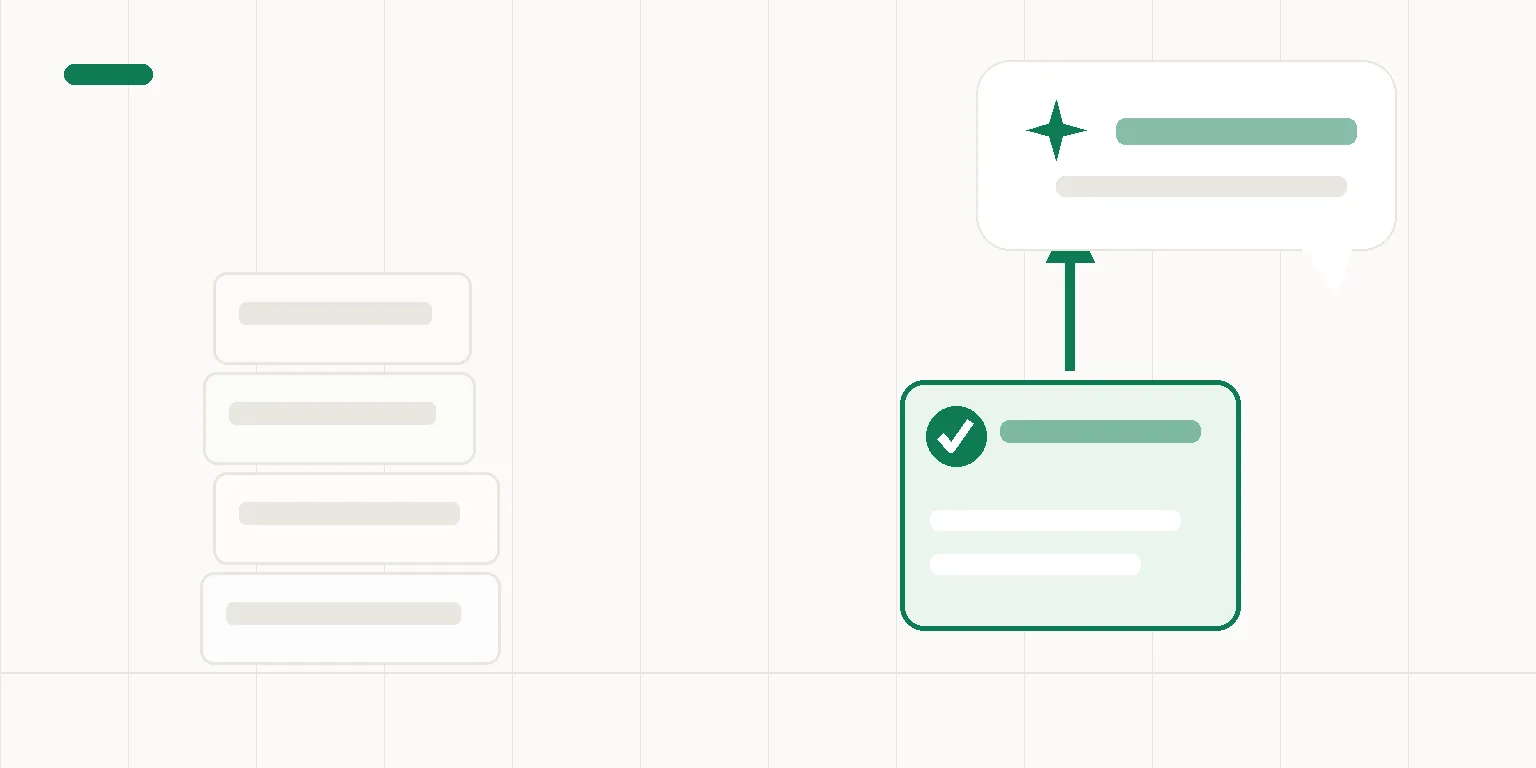
In paid search, a big budget wins almost every time, whoever pays the most per click shows up on top. An AI answer plays by different rules: ChatGPT and Perplexity do not sell ad placements, and a big brand has no automatic edge there. The model picks whichever business gives it the clearest, most specific information, and that can just as easily be a small local business as a national chain.
That is good news if you do not have an ad budget to compete with bigger players. It is also the reason it pays to look closely at how your own site and information are built, because that is what decides the outcome, not company size.
Why doesn't a big budget work the same way in AI search as in paid ads?
With Google Ads, you pay directly for visibility. An AI answer, by contrast, is built from whatever the model can find on the web and trust. Money does not buy a place on that list. A big brand can still have an advantage if its site happens to be clear and well marked up, but that advantage comes from the quality of the site, not the size of the marketing budget.
What actually decides the outcome when a big brand and a small business compete for the same mention?
In practice, it comes down to which one gives the model a clearer answer to three questions: what do you do, where, and for whom. A big brand often speaks in general terms about a whole country or an entire industry, because its messaging is built for a broad audience. A small local business can be far more specific:
- A precise location beats a broad one. "House cleaning in Seinäjoki and the surrounding area" is an easier match for a model than a national chain's "cleaning services nationwide."
- A concrete service description beats a slogan. Big-brand marketing copy is often full of generic phrases, while a small business can state plainly what it does day to day.
- A fresh, active site and profile. A big company's site may go years without updates for a specific local service, while a small business keeps its profile alive.
- Structured data costs nothing extra. Schema markup is available to any site regardless of size, a small business can use it just as well as a large one.
- Genuine reviews from a local customer base. These reinforce exactly the kind of local connection a big chain typically does not have.
AI does not ask how big you are. It asks how clearly you say what you do and for whom.
Is it even worth it for a small business to compete here?
Yes, especially if customers are looking for a local service rather than a national brand. Many of the questions people ask AI, "recommend a good plumber near me", already favor a precise, local answer over a generic chain mention. This is the same dynamic I wrote about in how ChatGPT chooses which business to recommend.
How do I know if this is worth investing in?
Ask an AI model directly for a recommendation in your industry and city. If your business is not mentioned but a competitor, big or small, is, the reason almost always comes down to the list above. For a closer look, an AI visibility report compares you directly against your competitors and tells you what differs.
Summary
In AI search, a big budget does not buy a place the way it does in paid search. What matters is how precisely and consistently you describe what you do, where, and for whom. A small, well-described local business can outrank a bigger, vaguely described competitor, with no ad spend at all.
If you want to know where you stand right now, I am happy to help you find out.
Want to see how you compare to competitors in AI search?
I will compare your business's AI visibility against your competitors and tell you what to fix first. Everything by email, no meetings.
Request a comparison →