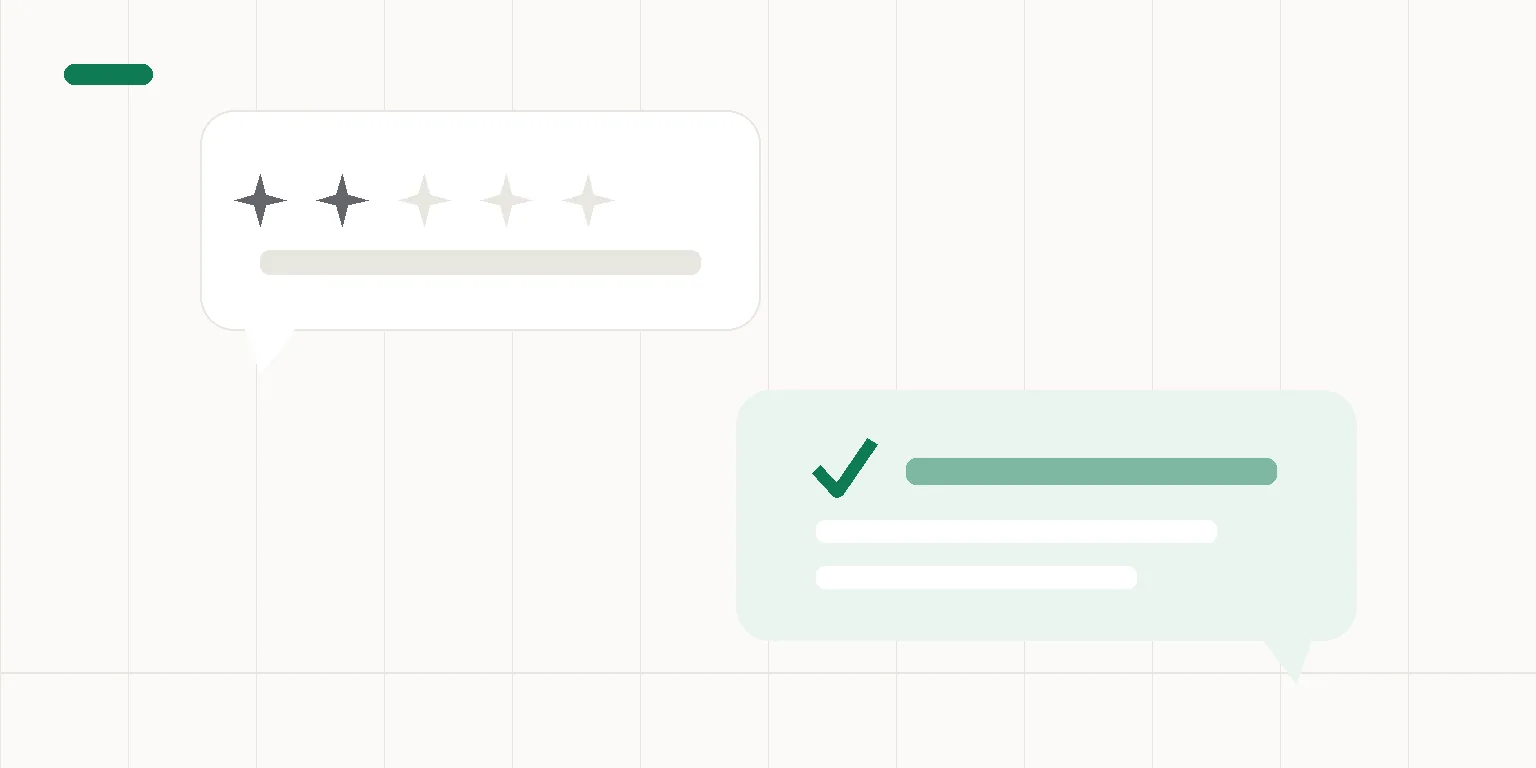
Respond to a negative Google review like this: acknowledge the customer's experience, don't get defensive, move the details to a private channel, and keep your public reply short. Reply within a couple of days, not the same evening while you're still annoyed. Below are two ready-made templates you can adapt to your own situation.
Most business owners fear a bad review more than it deserves. In reality, most readers judge your reaction more than whatever went wrong in the first place. One bad experience handled well can even build trust, while a defensive or dismissive reply amplifies the damage of the review itself.
Should you respond to a negative review at all?
Yes, always. Not responding looks like the business doesn't care about feedback, and that impression reaches every future reader, not just the person who wrote the review. A reply is your chance to show a potential customer how you handle things when something goes wrong.
What should you do before replying?
Wait until your first reaction has cooled off. Plenty of people write their best defense within an hour and regret it a week later. Read the review again the next day and ask yourself honestly: was there truth to the customer's experience, or is this a misunderstanding or even an unfair attack. The tone of your reply depends on the answer.
What structure works for a good response?
A working reply moves through three steps: acknowledge the customer's experience in your own words (don't repeat the accusation verbatim), apologize briefly if the mistake was yours, and then offer to resolve things privately, a phone number or email the customer can use. Keep the public part short, since the details belong in a private channel, not a public argument.
- Reply within 24-48 hours, not while you're still hot, but not weeks later either.
- Use the customer's name if you know it, it makes the reply feel personal rather than templated.
- Don't argue the details publicly, even if you're right, it always reads worse than a calm tone.
- Don't copy-paste the same reply to every review, readers notice the pattern and it costs you credibility.
- Always offer a private channel for follow-up, even if you doubt it will lead anywhere.
Two ready-made response templates
When the service or product didn't meet expectations:
Thank you for sharing this. I'm sorry to hear this visit didn't meet what it should have. I'd like to look into what happened and see how we can make it right, please reach out at [email/phone] so we can sort this out together.
When it's a misunderstanding or a difference of perspective about what happened:
Thanks for the feedback. I remember this situation a bit differently, but I'd still like to hear more about what happened, please reach out at [email/phone] so we can talk it through and see what we can do.
What should you avoid?
Don't accuse the customer of lying in public, even if you suspect it, write it neutrally instead and move the conversation to a private channel. Also don't try to get a review removed unless it violates Google's policies (hate speech, the wrong business, content written by a competitor). Trying to remove a genuine but unflattering review usually reads worse than the review itself.
Summary
A negative review isn't a disaster if you respond right: calmly, briefly, and with the details moved out of public view. Most readers judge your reply more than the original complaint, and a well-handled situation can end up working in the business's favor.
A review strategy for both good and bad reviews is also part of my $169 profile optimization. See also how to get more good reviews, so a single bad one stays in proportion.