Page count matters less than you think: does your website have too many or too few pages?
Many small businesses build sites with too many pages or too few. Here's how to size your page count right, and which pages actually matter.
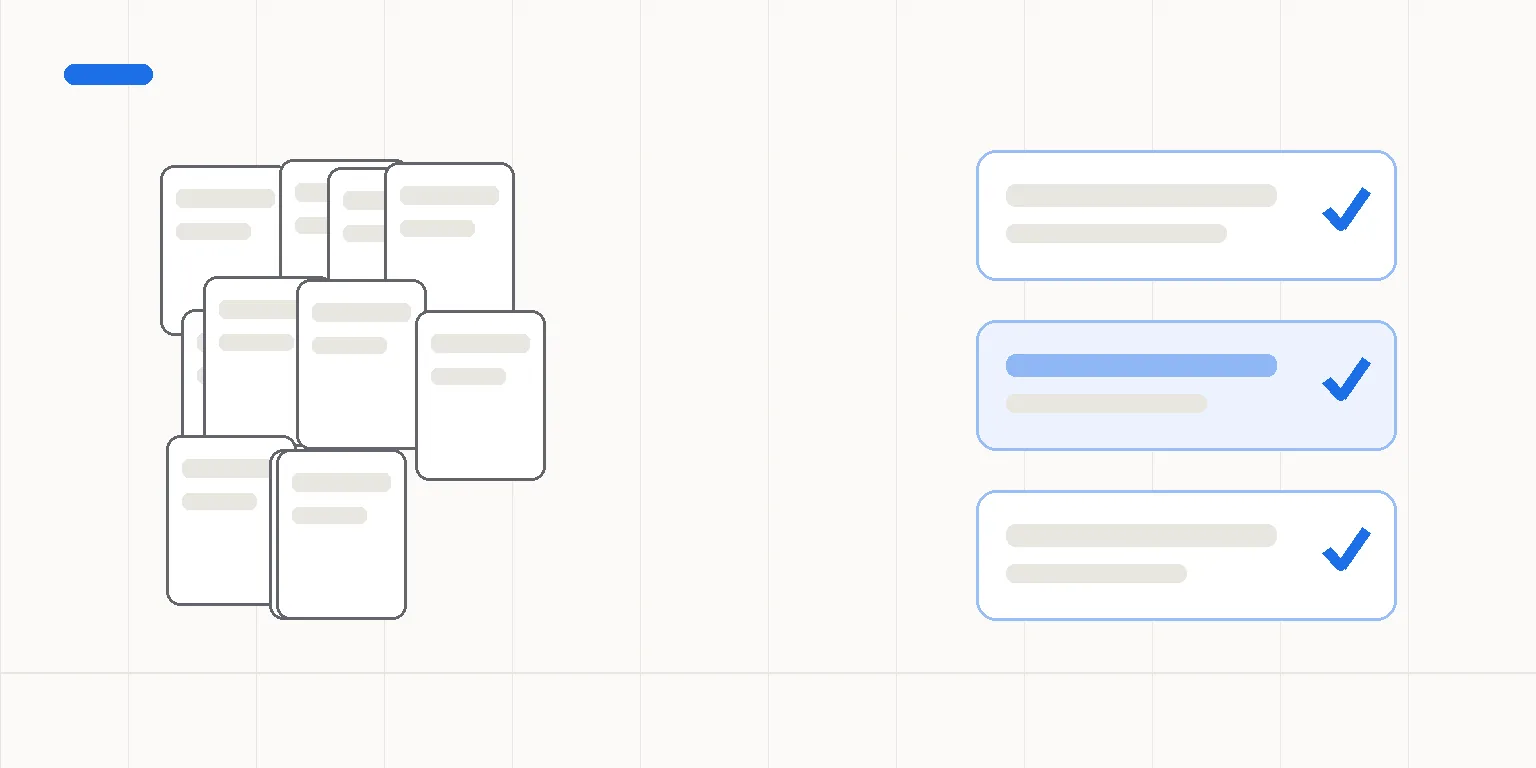
Most small businesses only need 4-6 pages: a homepage, a services page, contact details, and one or two pages that explain why someone should pick you. More pages rarely bring more customers if the basics aren't solid. Too few pages, on the other hand, leave important questions unanswered. The right number isn't a feeling, it's a question of what a visitor actually needs to find and trust you.
This is one of the most common things I notice when I look at small business sites: either the site has grown over the years into dozens of pages nobody remembers anymore, or the whole business is squeezed onto one page with no room to answer anything properly. Both problems come from the same place. Nobody stopped to think about what the site actually needs to contain.
How many pages should a small business website have?
Most businesses need four to six pages. The homepage says right away what you do and for whom. A services page expands on your offer. Contact details make it easy to reach you. The remaining one or two pages are whatever sets you apart: case studies, pricing, or a single deep article on a question your customers ask often.
If you have more pages than that, each one needs to earn its place. Otherwise they just split attention and make the site heavier to browse, for people and for search engines alike.
Which pages actually matter?
Three pages are almost always non-negotiable: a homepage, contact details, and some form of a services overview. Build the rest carefully around those three.
- Homepage. Answer three questions immediately: what you do, for whom, and how to reach you. If a visitor has to scroll far to find these, the page isn't doing its job.
- Services or products. One clear page is enough for most businesses. You don't need a separate subpage for every small service unless it truly has a different audience or a different search term.
- Contact. Phone, email and any form in one place, easy to find from every page.
- One page that sets you apart. Case studies, testimonials or pricing: something that answers why someone should choose you over a competitor.
- A blog, if you can keep it up. Useful long term, but a stale or abandoned blog is worse than no blog at all.
Every page needs to do something the others don't. Otherwise it's just an extra click between the customer and the answer.
When does it make sense to add more pages?
A new page is worth adding when it has a clear reason to exist: a specific service, a specific location, or a question customers keep asking. If a page doesn't have a clear purpose separate from the rest, it usually just buries the pages that matter, in navigation and in search results.
The same applies to services offered across several cities or to different customer groups. In that case, a dedicated page for each can genuinely improve how easily you're found, because each page answers a specific search precisely.
What's a sign your website has too many pages?
A clear sign is when you no longer remember everything that's on your own site, or you have to hunt for your own price on your own website. If a visitor has to click through several pages to find basic information, page count has grown at the expense of content.
Another sign is pages that haven't been touched in years. An outdated, forgotten page doesn't help anyone. It just hangs around on the sitemap and can even show stale information to a customer who finds it through search.
In short
Page count isn't what drives sales. Content and clarity do. For most small businesses, a handful of carefully considered pages will outperform ten half-finished ones. Go through your own site and ask of every page: does this do something the others don't? If the answer is no, merge it into another page or remove it entirely.
I build small businesses exactly this kind of sized, fast website, no more pages than needed and no fewer. Check out the websites service or read why a light static site beats a heavy platform in most cases.
Is your website the right size for your business?
I'll go through your site and tell you plainly which pages to keep, which to merge, and what's missing. $990 one-time, delivered in 1-2 weeks, all by email.
Request a site review →